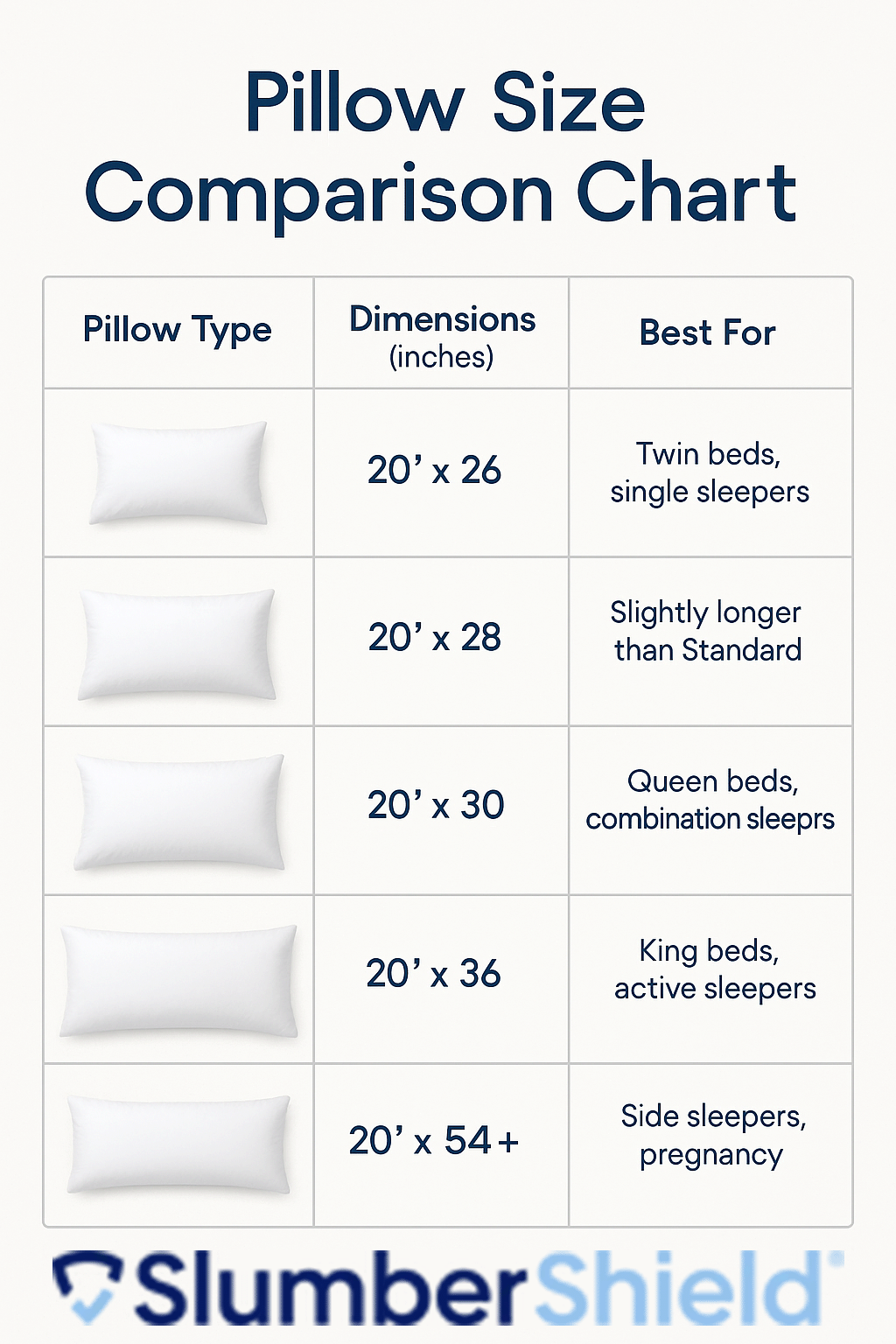
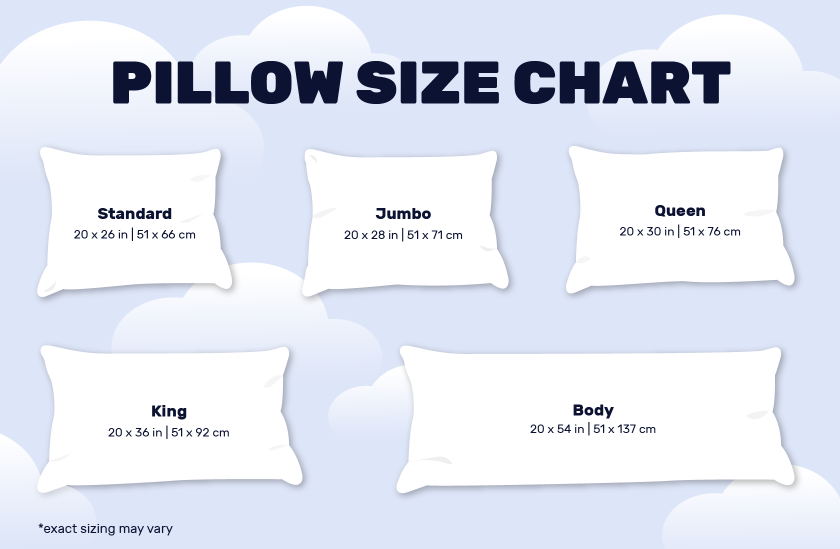
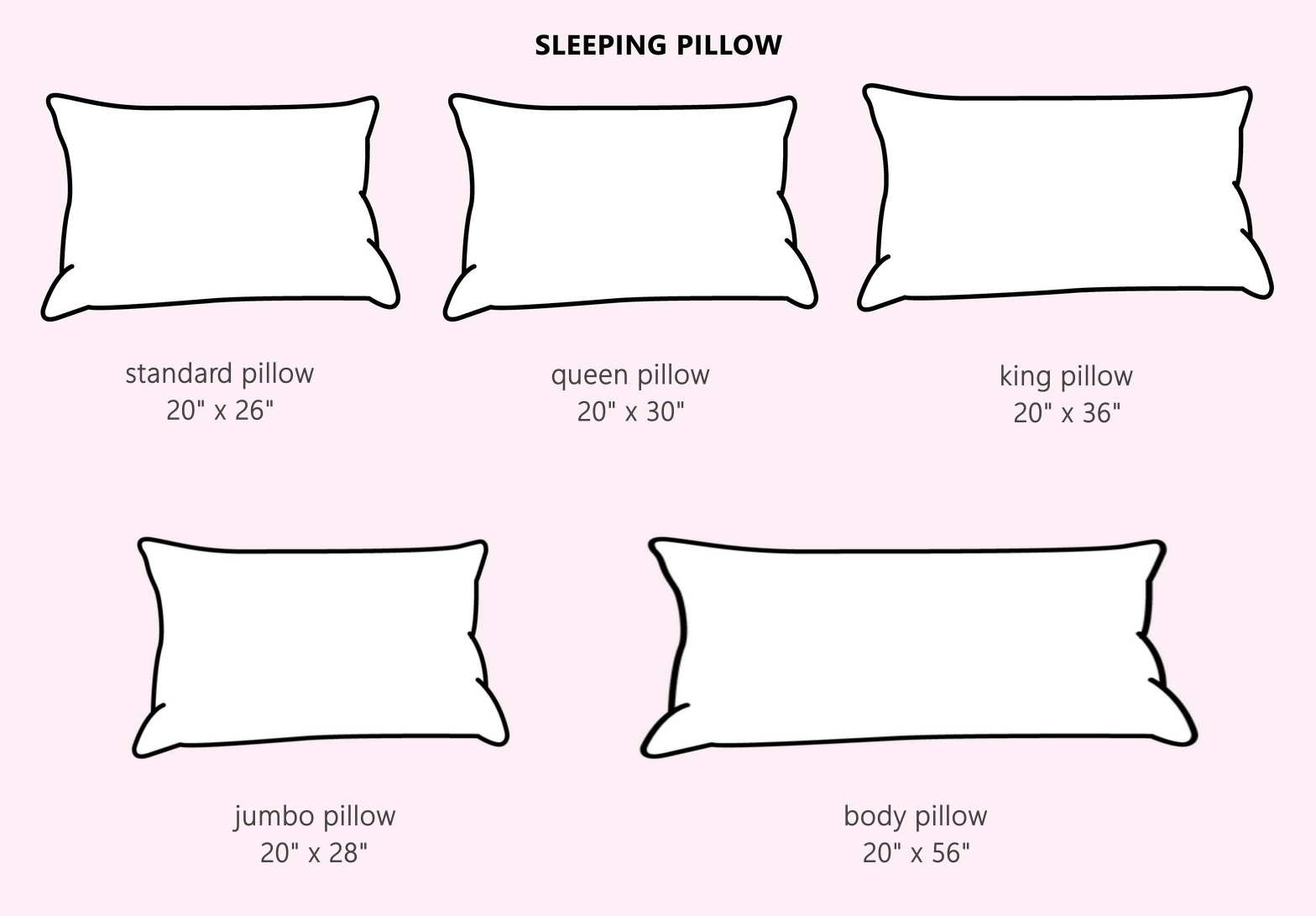
Queen pillows are longer at about 30 inches; standard pillows are about 26 inches.
If you are debating standard pillow vs queen pillow, you are not alone. I help shoppers weigh comfort, size, and value every week. The right pick depends on your bed, sleep style, and how much you move at night. This guide breaks down standard pillow vs queen pillow with clear answers, real-life tests, and expert tips you can trust.
What size are standard and queen pillows, and why does it matter?
A standard pillow is usually 20 x 26 inches. A queen pillow is usually 20 x 30 inches. That extra 4 inches can change how your pillow fits your bed and how you sleep.
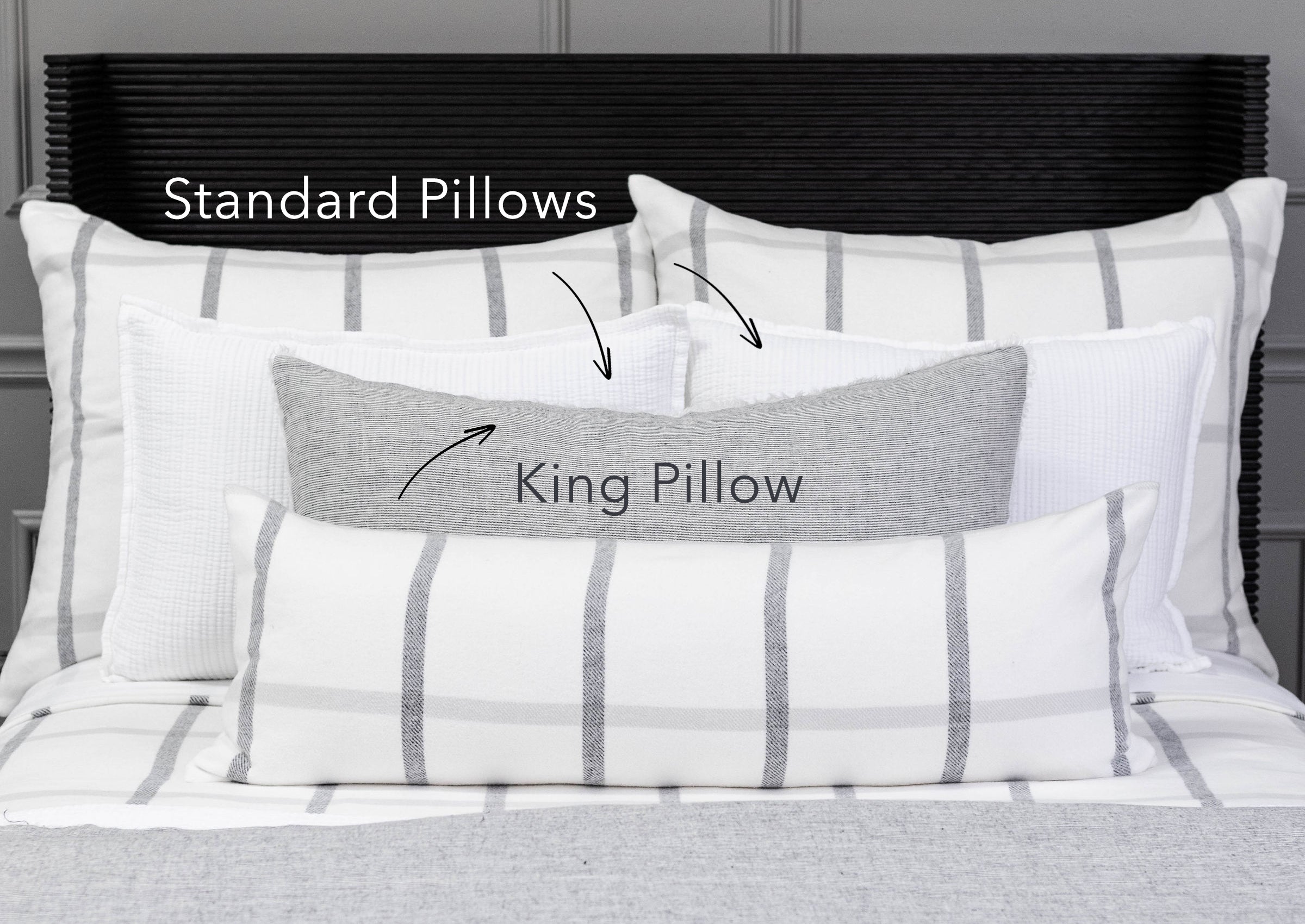
On a queen bed, two standard pillows leave a small gap. Two queen pillows cover the width with a tidy look. On a full bed, two standard pillows fit best. Two queen pillows can feel crowded.
Standard pillowcases fit standard pillows. Queen pillowcases fit queen pillows and can also hold standard pillows with extra tuck. In my bedding trials, a fitted case keeps the fill stable and smooth. This is a key detail in the standard pillow vs queen pillow decision.
Comfort by sleep position and movement
If you toss and turn, the queen size gives you more surface area. Your head stays supported when you roll without falling off the edge. That extra length can reduce midnight readjusting.
Back sleepers need medium loft and neutral neck support. Both sizes can work, but queen pillows help if you shift sides. Side sleepers often like a higher loft and a wider target. Queen pillows make shoulder-to-ear spacing feel steady. Stomach sleepers need low loft to keep the neck flat. A soft standard pillow can be easier to shape thin.
In my tests with side sleepers, the queen size cut down on edge collapse. With stomach sleepers, a squishable standard pillow prevented neck strain. This is where the standard pillow vs queen pillow choice becomes personal.

Materials, loft, and firmness
Size is not the only factor. Fill changes feel and support more than length does. Focus on loft and firmness first, then pick the size.
Common fills work like this:
- Memory foam gives contour and pressure relief. Solid foam keeps shape. Shredded foam is more adjustable and cooler.
- Latex feels buoyant and responsive. It holds loft well and suits side sleepers who want support.
- Down feels plush and cloud-like. It is easy to shape but needs fluffing.
- Down alternative is hypoallergenic and budget friendly. It is simple to wash and dries faster.
Match loft to your position:
- Side sleepers do well with medium-high loft to fill the shoulder gap.
- Back sleepers do well with medium loft to keep the neck level.
- Stomach sleepers do best with low loft to avoid neck bend.
Cooling covers, phase change fabrics, and breathable weaves help hot sleepers. In the standard pillow vs queen pillow debate, pick the fill first. Then use size to fine-tune comfort and bed fit.

Bed size, styling, and pillow layout
Your bed size guides the cleanest layout. For a twin or twin XL, one standard pillow looks and feels balanced. For a full bed, two standard pillows work well and leave room to breathe.
On a queen bed, you can use two standard pillows or two queen pillows. Standard pillows give a slight center gap. Queen pillows create a full, hotel-style span. On a king bed, two queen pillows look small. Most go with king pillows for coverage. If you stick with standard or queen, use three across for symmetry.
For styling, use matching shams or protectors to reduce wrinkling. A well-fitted case also reduces bunching at the ends. This is a subtle win in standard pillow vs queen pillow choices for design lovers.

Care, durability, and hygiene
Pillows collect sweat, oils, and dust. Use a zippered protector under the case. Wash protectors often to extend pillow life. Air out your pillows in the sun when you can.
General timelines help. Down alternative often lasts one to two years. Down and memory foam can last two to three years. Latex can last three years or more. Replace sooner if you see flattening, lumps, or neck pain. In the standard pillow vs queen pillow plan, size does not change lifespan. Care and fill do.
To clean, follow the tag. Many down alternative pillows are machine washable. Memory foam is spot clean only. Always dry fully to prevent odor or mold.
Price and value
Standard pillows often cost a little less than queen pillows. The difference is small, but it adds up if you buy sets. Expect a small premium for queen size cases too.
Spend on fill quality before size. A well-made standard pillow beats a poor queen pillow every time. Look for trial periods and clear return policies. In my experience, price jumps come from brand, fabric, and fill, not size. Keep that in mind for standard pillow vs queen pillow shopping.

Who should choose which size?
Pick the standard pillow if:
- You sleep on a twin or full bed and want a balanced fit.
- You are a stomach sleeper who likes a thin, easy-to-shape pillow.
- You want a lower price and easier case shopping.
Pick the queen pillow if:
- You sleep on a queen bed and want full coverage edge to edge.
- You change sides often and want a wider landing zone.
- You read or watch TV in bed and want more headroom.
For couples, test both over a week. It is common to mix sizes in one home. The right standard pillow vs queen pillow choice can be different for each person.

A simple buying checklist and fit test
Use this quick path when you shop:
- Pick fill and loft first. Match to your sleep position and heat level.
- Pick size second. Match to bed width and how much you move.
- Check case fit. A snug case gives better support and fewer wrinkles.
- Check care tags. Make sure you can maintain it at home.
Try this at home:
- Lie down in your normal position. Your neck should feel level and relaxed.
- Roll to your side and back. Your head should stay supported without gaps.
- Hug the pillow and breathe. If your nose tilts up or down, adjust loft or size.
Keep notes for three nights. This makes standard pillow vs queen pillow choices clear and calm.
Common myths about standard and queen pillows
Myth: A queen pillow is always better for a queen bed. Reality: Two standard pillows can fit great and may suit stomach sleepers more.
Myth: Size changes support. Reality: Fill, loft, and firmness drive support. Size fine-tunes space and coverage.
Myth: Bigger pillows are hotter. Reality: Heat comes from fill and cover breathability, not length.
Myth: One size works for everyone. Reality: Body shape and sleep style matter most in standard pillow vs queen pillow choices.
Myth: Price equals comfort. Reality: Materials and fit to your needs matter more than cost alone.
Frequently Asked Questions of standard pillow vs queen pillow
What is the difference between a standard pillow and a queen pillow?
A standard pillow is about 20 x 26 inches. A queen pillow is about 20 x 30 inches and offers more surface area.
Will a standard pillow fit in a queen pillowcase?
Yes, it will fit with extra fabric to tuck. A snug queen case can make a standard pillow feel smoother and less lumpy.
Is a queen pillow better for side sleepers?
Often yes, because the extra length helps when you roll. Still, loft and firmness matter more than size.
Can I use two queen pillows on a queen bed?
Yes, they cover the width with no gap. Many like the fuller, hotel look and the added room to move.
Does pillow size affect neck pain?
Size has a small impact. Proper loft and support reduce neck pain more than standard pillow vs queen pillow length.
Conclusion
The real choice is comfort first, size second. Pick the fill and loft that match your position, heat level, and neck needs. Then use standard or queen to fine-tune space, coverage, and styling. The standard pillow vs queen pillow debate is simple when you test for a few nights and listen to your body.
Try one size for a week, then swap if needed. Keep what lets you sleep deeper and wake without stiffness. If this helped, share your experience, ask a question below, or subscribe for more sleep guides.
Leave a Reply