Standard pillows fit most beds and sleepers; king pillows offer more width and style.
If you are torn on standard vs king pillow, you are not alone. I have helped hundreds of sleepers test sizes, fills, and lofts in real rooms, not just in showrooms. In this guide, I will break down size, comfort, support, styling, and care so you can choose the right size the first time.
Standard vs King Pillow Dimensions and Bed Fit
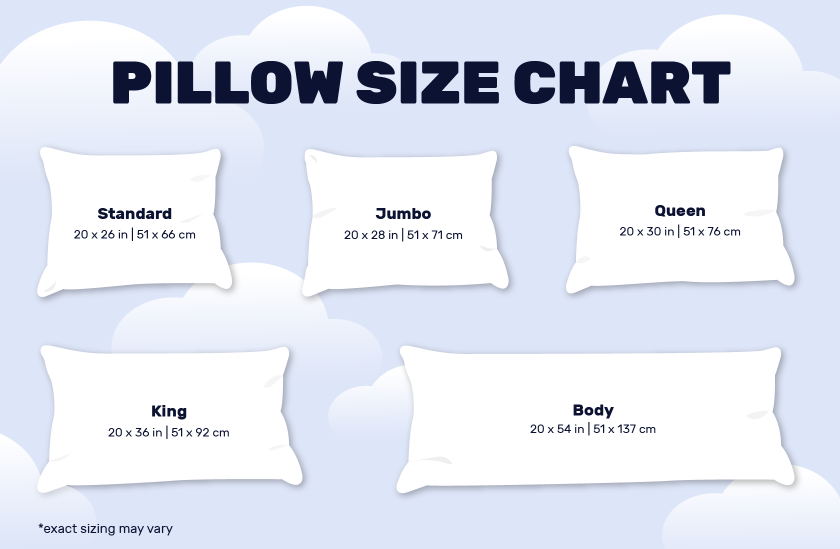
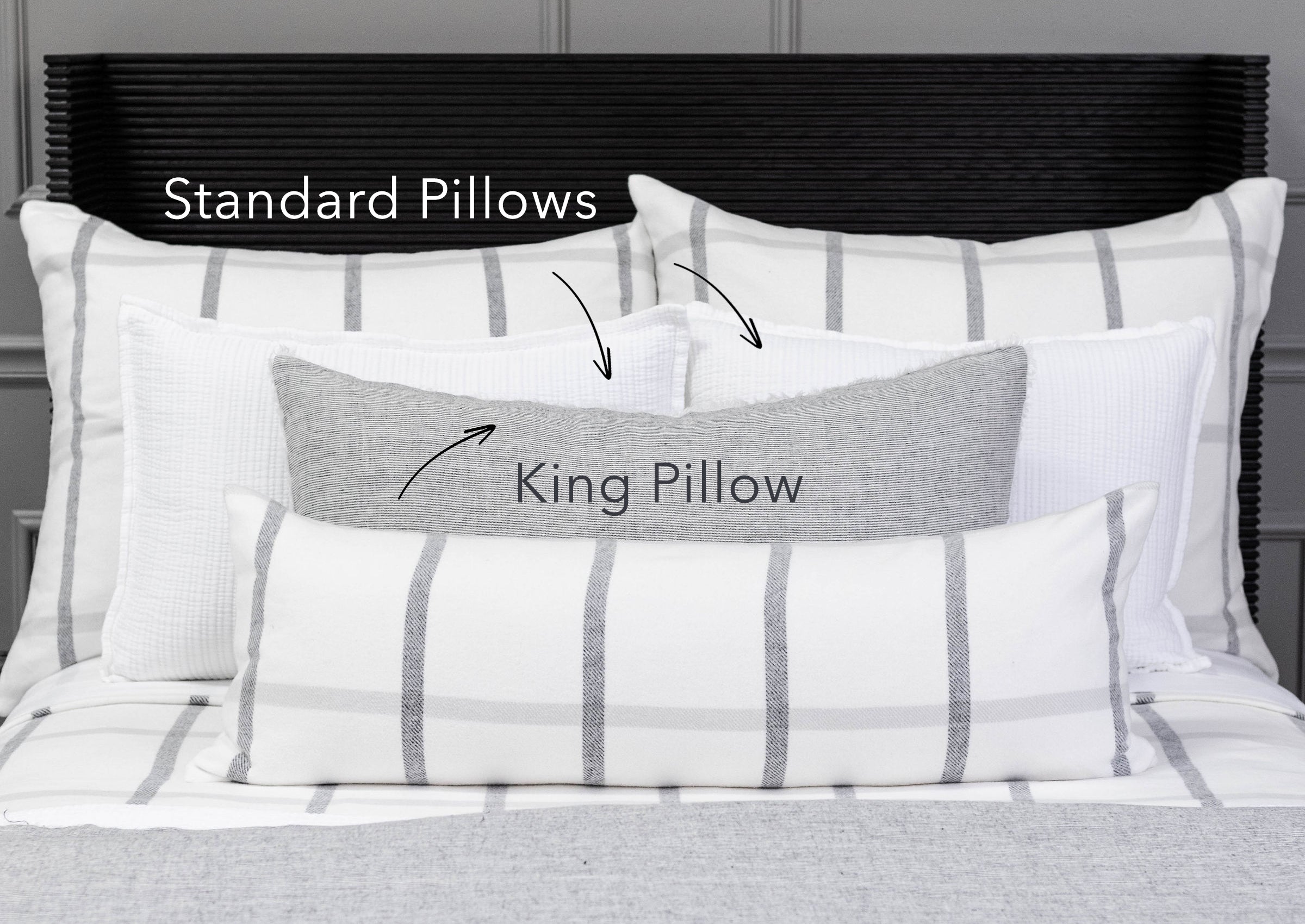
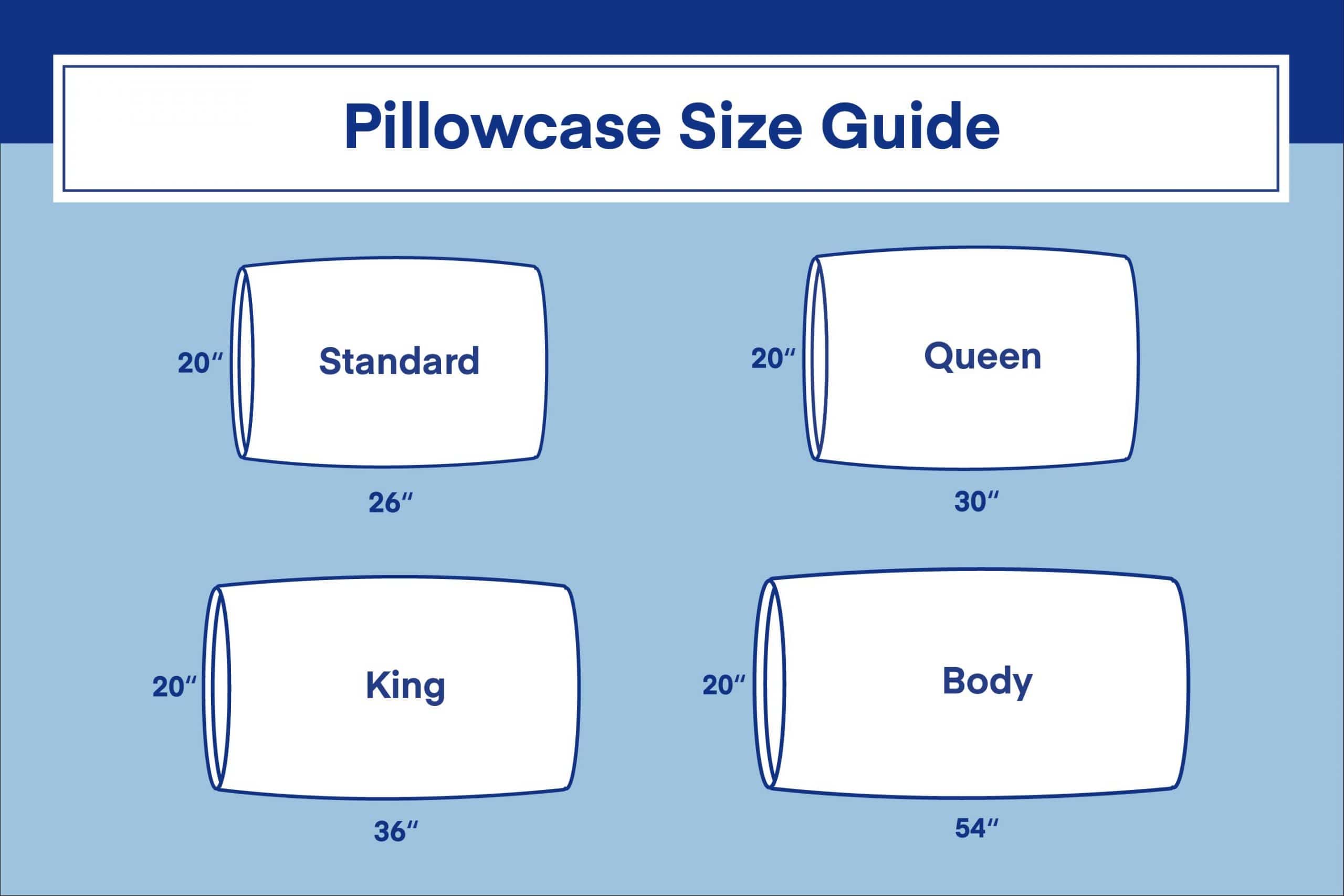
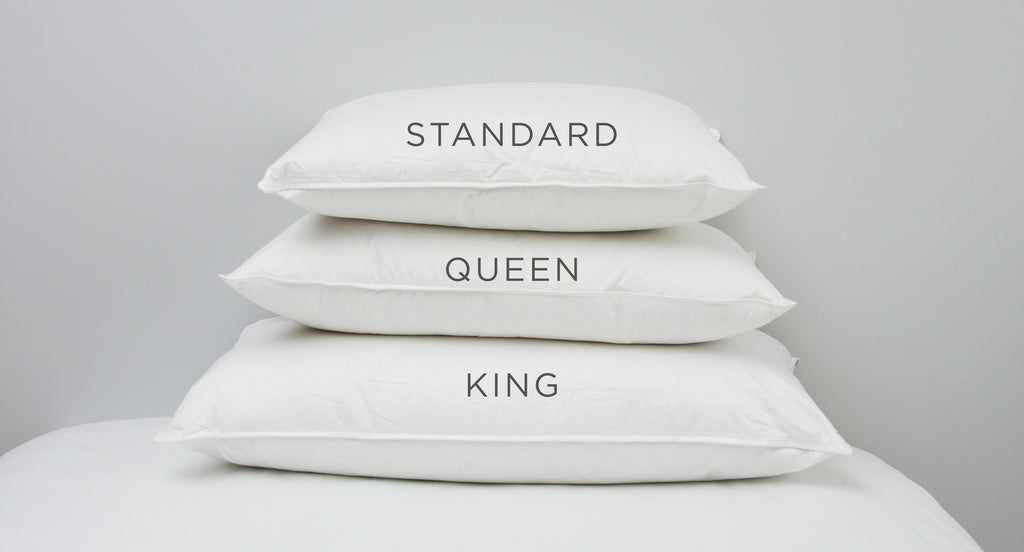
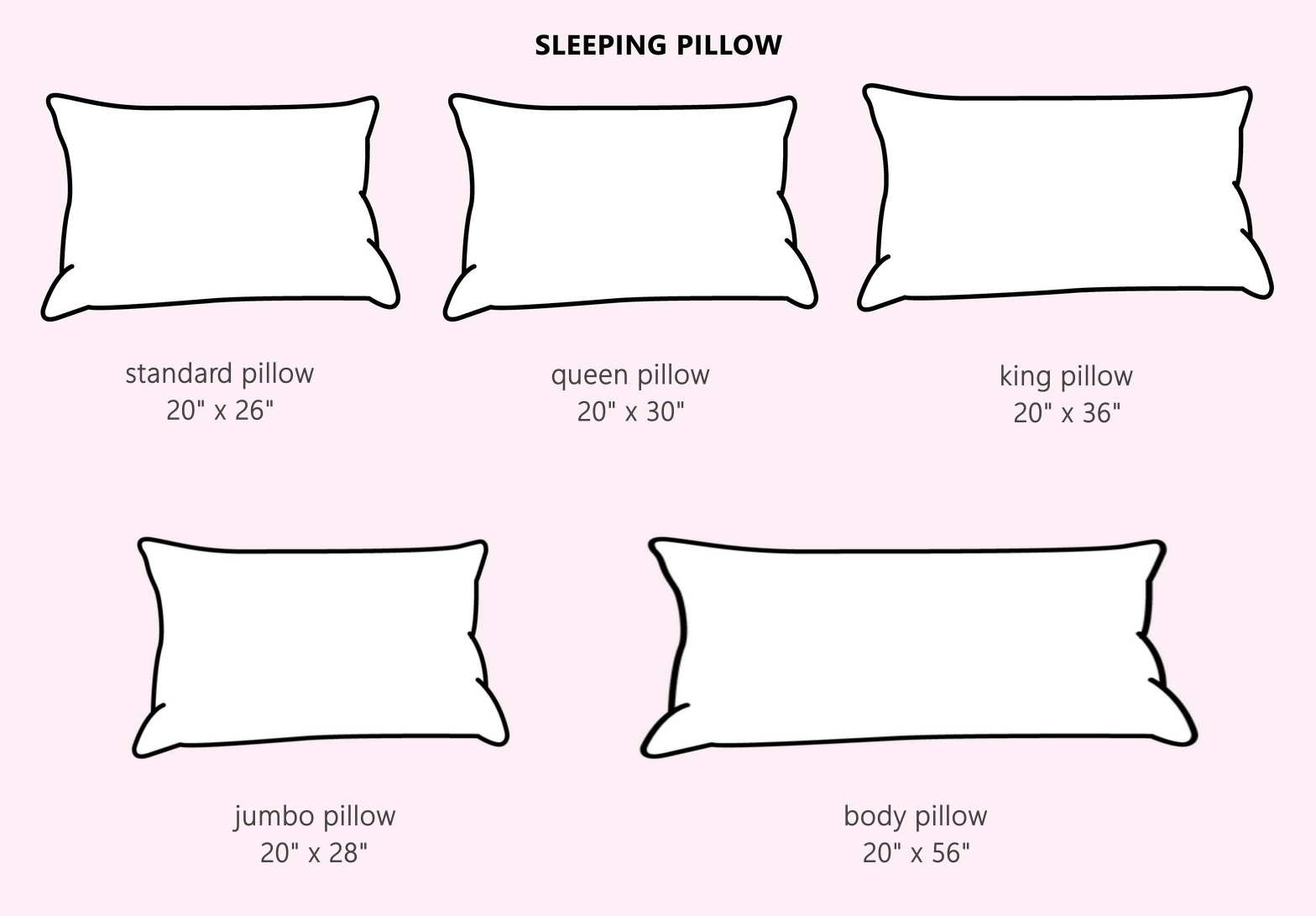
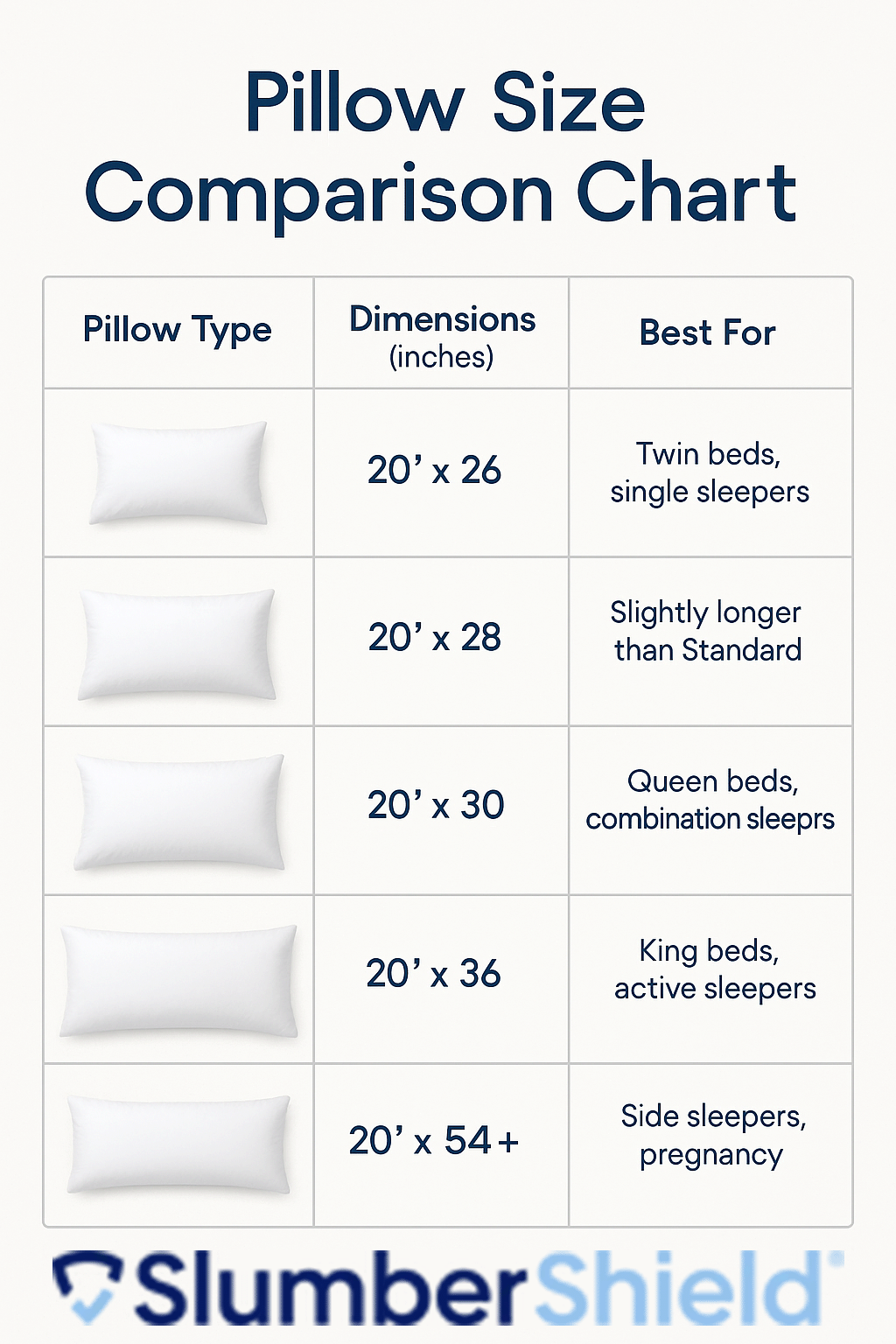
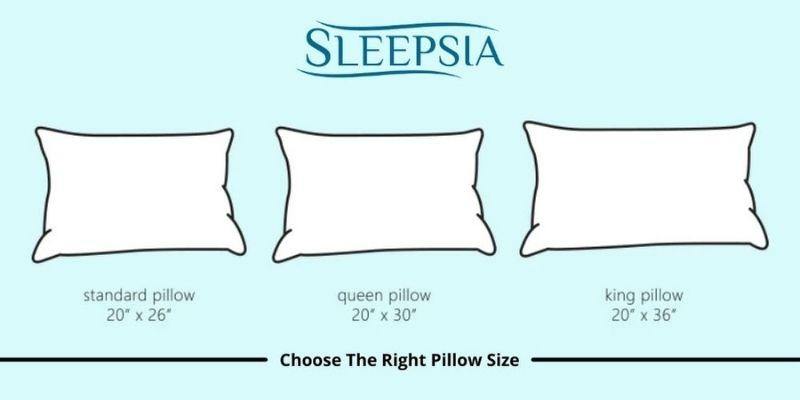
Knowing true sizes prevents guesswork. A standard pillow is about 20 x 26 inches. A king pillow is about 20 x 36 inches. That extra 10 inches on a king changes support, movement, and the look of your bed.
How many pillows fit across a mattress:
- Twin or Twin XL: One standard fits well. One king also fits but may look long.
- Full: Two standard pillows fit. Two king pillows feel tight and can hang over.
- Queen: Two standard or two queen pillows fit. One king per side can work if you like a bold look.
- King: Two king pillows are ideal. Three standard pillows look layered and plush.
- California king: Two king pillows fit, or three standard pillows for a hotel style.
Quick reference for common pillowcase sizes:
- Standard or queen case: Usually 20 x 30 inches and fits standard or queen pillows.
- King case: Usually 20 x 36 to 20 x 40 inches and fits king pillows.
When people search standard vs king pillow, they often worry about crowding. On a queen bed, two king pillows leave little room for extra shams. On a king bed, two standard pillows look small and can shift apart.
Benefits and Drawbacks: Standard vs King Pillow
Standard pillow pros:
- Easy to fit in most beds and cases.
- Simple to move under your head or hug.
- Often cheaper and more widely available.
Standard pillow cons:
- Less width for broad shoulders.
- Can separate on wide beds, creating a gap.
- Less of a statement for styling.
King pillow pros:
- More width for active sleepers who roll.
- Smooth, full look on king and California king beds.
- Great backrest for reading or lounging.
King pillow cons:
- Can push your head forward if too tall or firm.
- Harder to fluff and heavier to move.
- Cases cost more and may be harder to find in sets.
From years of fittings, I see this pattern: if you value ease, pick standard. If you value span and style, a king shines. Your choice in the standard vs king pillow debate should match how you sleep and how you style your bed.
Sleep Position and Body Type: What To Choose
Sleep position matters more than most think when weighing standard vs king pillow.
Side sleepers:
- Need enough loft to fill the shoulder gap.
- Standard works for narrow to average shoulders.
- King adds width so you do not roll off the edge. Pick a medium to high loft.
Back sleepers:
- Need a mid-loft that keeps the neck neutral.
- Standard is often best for easy fine-tuning.
- King can work if the loft is not too tall.
Stomach sleepers:
- Need low loft to avoid neck strain.
- Standard is safer, since king width can tempt face-plant sleeping.
Combination sleepers:
- Move a lot and need room to roam.
- King reduces edge drop-off.
- Standard works if you use two pillows and tuck one as a barrier.
Body type notes:
- Broad shoulders or larger frames: A king can feel more stable side to side.
- Narrow shoulders or smaller frames: A king can force the chin down if the loft is too high.
Personal tip from testing beds in real homes: when a client had narrow shoulders, a firm king pillow pushed the chin toward the chest. Neck pain followed in two nights. Swapping to a softer standard pillow fixed it fast. This shows that size plus loft must match your build.
Sleep research supports this approach. A neutral neck angle lowers strain and snoring risk. In the standard vs king pillow choice, aim for a pillow that holds the head level with the spine, not tilted.
Materials, Fill, and Loft: How Size Interacts With Feel
The fill changes how a standard vs king pillow performs.
Memory foam:
- Great pressure relief and neck contour.
- One-piece foam in king size can feel tall and firm. Check the height.
- Shredded foam lets you remove fill to dial in loft.
Latex:
- Springy and supportive with good airflow.
- Holds shape well in standard or king sizes.
- Choose a lower profile if you sleep on your back or stomach.
Down and down alternative:
- Soft, cozy, and easy to squish into shape.
- In king size, you may need a higher fill power to avoid flat spots.
- Hypoallergenic alternatives are easier to wash.
Adjustable fill:
- Zippered designs let you add or remove fill.
- Ideal for couples who want different heights in standard vs king pillow setups.
- Great if your sleep position changes over time.
Cooling features:
- Ventilated foam, gel infusions, phase change covers, and natural latex help hot sleepers.
- Larger king pillows hold more heat if airflow is poor. Look for breathable covers.
My field note: I love a shredded memory foam king for side sleeping because I can bulk up the middle and thin the edges. For travel or guest rooms, I stock standard down alternative pillows. They adapt to many sleepers without fuss.
Styling and Pillowcases: Make The Bed Look Right
Your pillow size sets the vibe of the whole bed. In the standard vs king pillow debate, think beyond sleep to style.
For queen beds:
- Two standard pillows with two standard shams are clean and balanced.
- Add one lumbar or one Euro pillow for polish.
- Two king pillows can look crowded with layered shams.
For king or California king beds:
- Two king pillows fill the width and look tailored.
- Add two to three Euro shams for height and hotel charm.
- A long lumbar cushion unifies the look with less bulk.
Case fit tips:
- Standard pillows often fit in standard or queen cases. A queen case on a standard pillow leaves extra fabric at the end, which you can tuck.
- King pillows need true king cases for a smooth look.
Color and texture:
- Mix crisp cotton with a textured knit or a soft linen for depth.
- Keep the palette simple on small beds to avoid a cluttered feel.
If you host guests, a standard vs king pillow mix works well. Put a standard on top of a king so each person can pick their favorite.

Care, Lifespan, and Cost
Care instructions vary by fill and size, which affects the standard vs king pillow choice.
Washing:
- Down alternative and many poly fills are machine washable.
- Down often needs gentle washing and low heat drying with dryer balls.
- Solid foam cores cannot go in the washer; spot clean and wash the cover.
Replacement timeline:
- Synthetic or down pillows: about 1 to 2 years.
- Solid foam or latex: about 2 to 3 years.
- Replace sooner if the pillow stays flat, smells, or causes neck tightness.
Price ranges:
- Standard is usually 10 to 20 percent cheaper than king.
- King pillowcases and protectors also cost more.
Hygiene tip:
- Use a zippered protector under the case to block sweat and dust.
- Air pillows in sunlight for a fresh, dry feel.
A simple test: Fold the pillow in half. If it does not spring back, it is time for a new one. This test is handy when you compare standard vs king pillow options in stores.
Standard vs King Pillow: Quick Comparison
- Best bed match: Standard fits twin through queen. King fits king and California king.
- Sleepers: Standard suits most back and stomach sleepers. King helps side and combo sleepers who roll.
- Loft control: Standard is easier to fine-tune. King needs careful loft choice to avoid chin tuck.
- Cost and care: Standard is cheaper and easier to wash. King needs larger cases and more drying time.
- Style: Standard is neat and simple. King delivers a full, hotel-grade look on wide beds.
If you share a bed, try one standard and one king per side for a week. Many couples land on this hybrid. It gives freedom without buying two full sets at once in the standard vs king pillow search.
Frequently Asked Questions of standard vs king pillow
What is the exact size of a standard vs king pillow?
A standard pillow is about 20 x 26 inches. A king pillow is about 20 x 36 inches.
Do king pillows work on a queen bed?
They can, but the look can feel tight with extra shams. Many people prefer two standard or two queen pillows on a queen.
Which is better for side sleepers: standard vs king pillow?
Both can work. Pick the size that keeps your head level and use a medium to high loft to fill the shoulder gap.
Are king pillows better for tall people?
Often yes, because the extra width lets you roll without falling off the pillow. Make sure the loft does not push your chin down.
Do I need special cases for king pillows?
Yes, you need king-size pillowcases. Standard or queen cases will not cover the length of a king pillow.
Will a king pillow help with snoring?
It might if it holds your head and neck in a neutral line. Size alone is not enough; loft and support matter more.
Can I travel with a king pillow?
It is bulky and hard to pack. A compressible standard pillow or travel pillow is more practical.
Conclusion
Size is not just about looks. It shapes comfort, neck angle, and how your bed feels every night. In the standard vs king pillow decision, choose the size that matches your sleep position, shoulder width, and bed size. Then dial in the right fill and loft.
Try this plan: test a standard for a week, then a king for a week, using the same fill type. Note your neck, your sleep depth, and morning comfort. Ready to sleep better tonight? Explore more guides, ask a question in the comments, or subscribe for simple, science-backed sleep tips.
Leave a Reply